

Words of Wisdom for New Hunters
By Molly Kirk/DWR
You’ve bought your hunting license. You’ve taken your Hunter Education course and have your certification. You understand how to be safe and ethical. You’ve scouted a few places to hunt and have your gear all ready. You’re a new hunter, and you’re ready for hunting season, right?
Technically, you are ready, but there are always some surprises when you head out into the field. We asked some adult-onset hunters who have completed a few seasons to weigh in on what they wished they knew before they climbed into the treestand the first time. Ashley Baker, an ICU nurse who started hunting two years ago through DWR’s Virginia Outdoor Women program; Jennifer Czajkowski, an IT program director who has been hunting for five years; and James Early, an investment analyst who just started hunting recently, all have some good advice for new hunters.
Be open to advice.
Czajkowski: Most of my hunting knowledge had come from my husband, who’s a right-handed guy, and I’m a left-handed female. I approach things differently, right? I have taken multiple virtual classes and some of the in-person workshops. In those situations, you get multiple opinions from different people and can see the slightly different way that each person does it. That’s been super helpful.
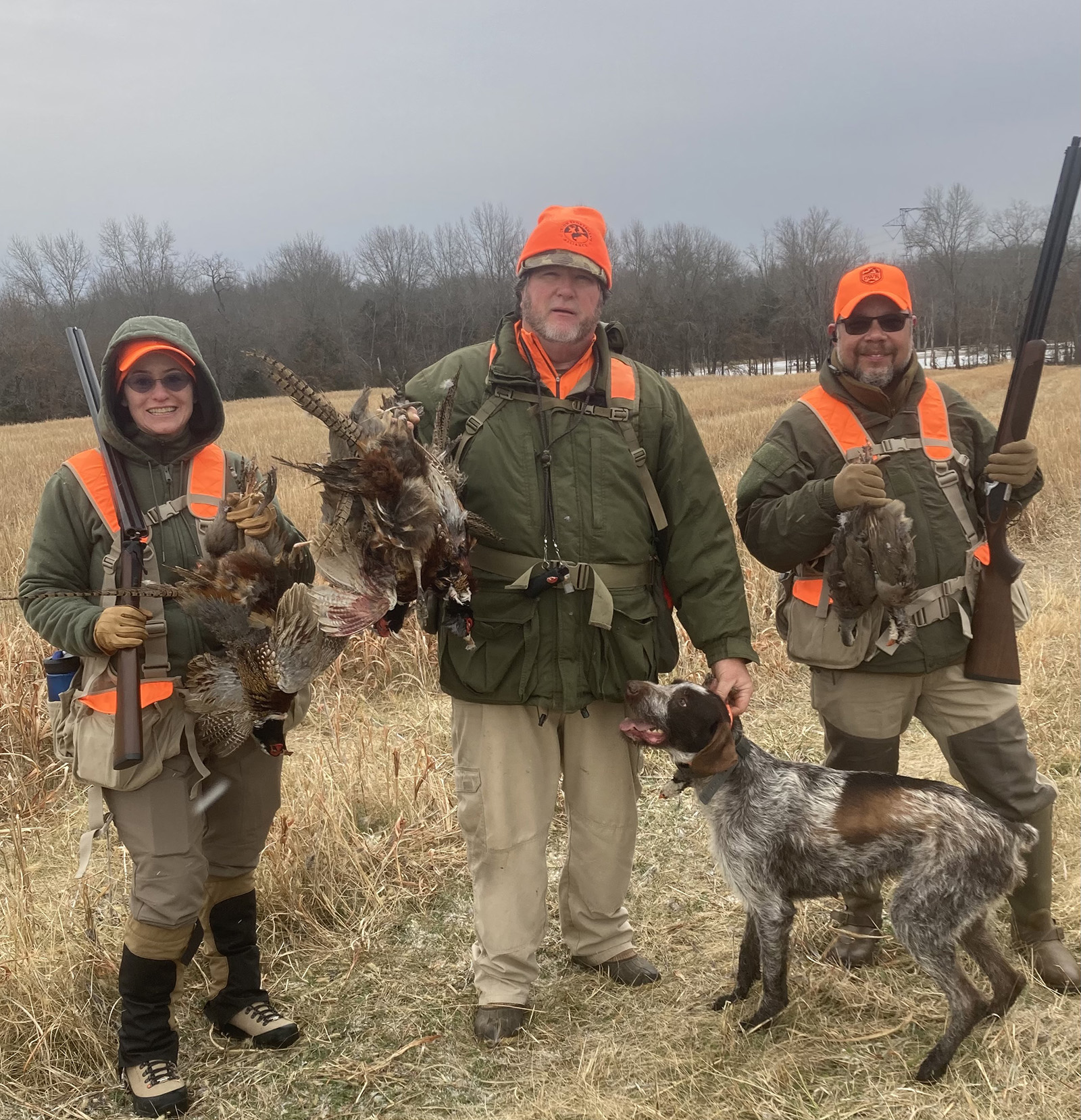
Jennifer Czajkowski (left) after a mentored hunt for upland game birds that she was able to attend as part of the DWR’s hunter workshop program. Photo courtesy of Jennifer Czajkowski
Early: You get all the rules and safety information from Hunter’s Ed, but hunting also has certain rules of etiquette that can even vary by region—things like using another hunter’s empty stand, or how close to set up next to another hunter. Interacting with DWR’s Hunter Ed team was really instrumental in making me feel like I wouldn’t commit too many faux pas as a new hunter. Often the Q and A part of a class is the best part. You can ask anything, and you can listen to what other people are asking. And hunters have warmly welcomed me; it’s a great group.
Make sure you’re going to be comfortable.
Czajkowski: Make sure your gear and clothes are comfortable because you’re going to sit or stand or walk in them for a really long time. It’s one thing to try something on. It’s a whole other thing to spend eight hours in it. And definitely, good boots and socks. I can’t stress that one enough—make sure not to try those boots on the day that you think you’re going to go out and hunt.
Baker: Dress for the weather, of course, but also just get out there. Oh, and wear the right kind of underwear. People don’t think about it—they think about all the outerwear—but it’s important to make sure your underwear isn’t something that’s going to get uncomfortable after a few hours in a stand.
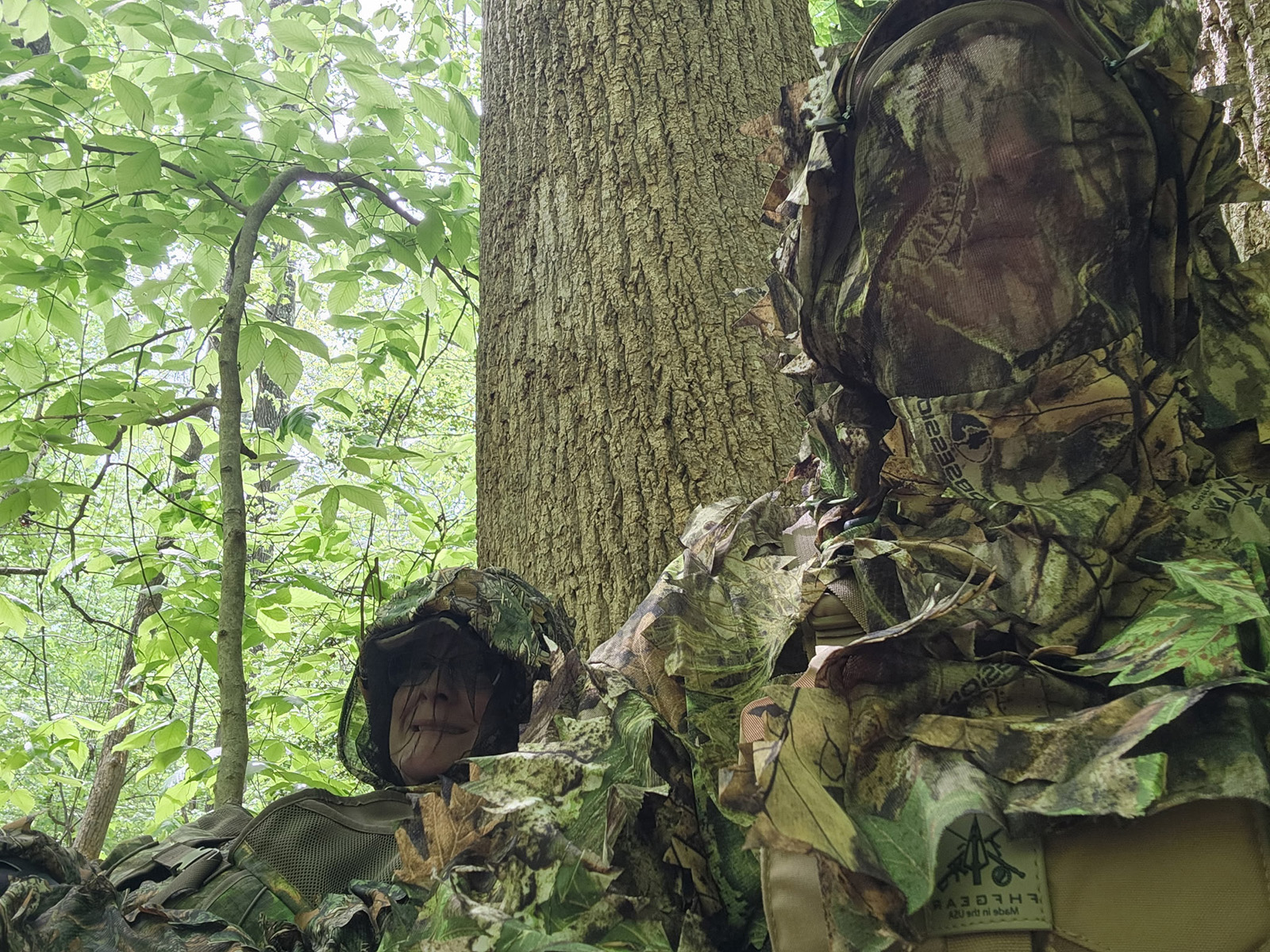
Jennifer Czajkowski (left) and Ashley Baker (right) hunting together. Photo courtesy of Ashley Baker
Keep yourself fueled.
Czajkowski: Banana chips are always in my pack. I’ll get nervous while I’m out there, so it calms my stomach. But it’s also good to have a little bit of kind of protein and energy when you’re out doing long stalks or sitting there for long periods. Also, some folks can’t function without coffee, so make sure you get a day’s worth of coffee. But then also make sure you know how you’re going to get rid of all that coffee.
Public land is more welcoming than you think.
Baker: Most of where I hunt is public land, and, honestly, it’s a lot safer than some people think. I’m often there by myself. If I do manage to bump into somebody, they’re usually super nice. I initially use the DWR website to see what’s available, and then I go into OnX. For myself, I’ve tried U.S. Geological Survey [website], but I’ve honestly had a hard time navigating it. I also just go and explore—any excuse to wander out in the woods, right?
Early: I was surprised, especially for someone living in Northern Virginia, at how much public land is available. There’s a lot that’s less than an hour drive from Northern Virginia, so you don’t have to get a hotel room to hunt—that was one of the neatest surprises. I have become a maniac in terms of scouring public land opportunities in Virginia, of which there are plenty. I think I’ve applied for 10 DWR quota hunts and applied a couple others at the National Wildlife Refuges.
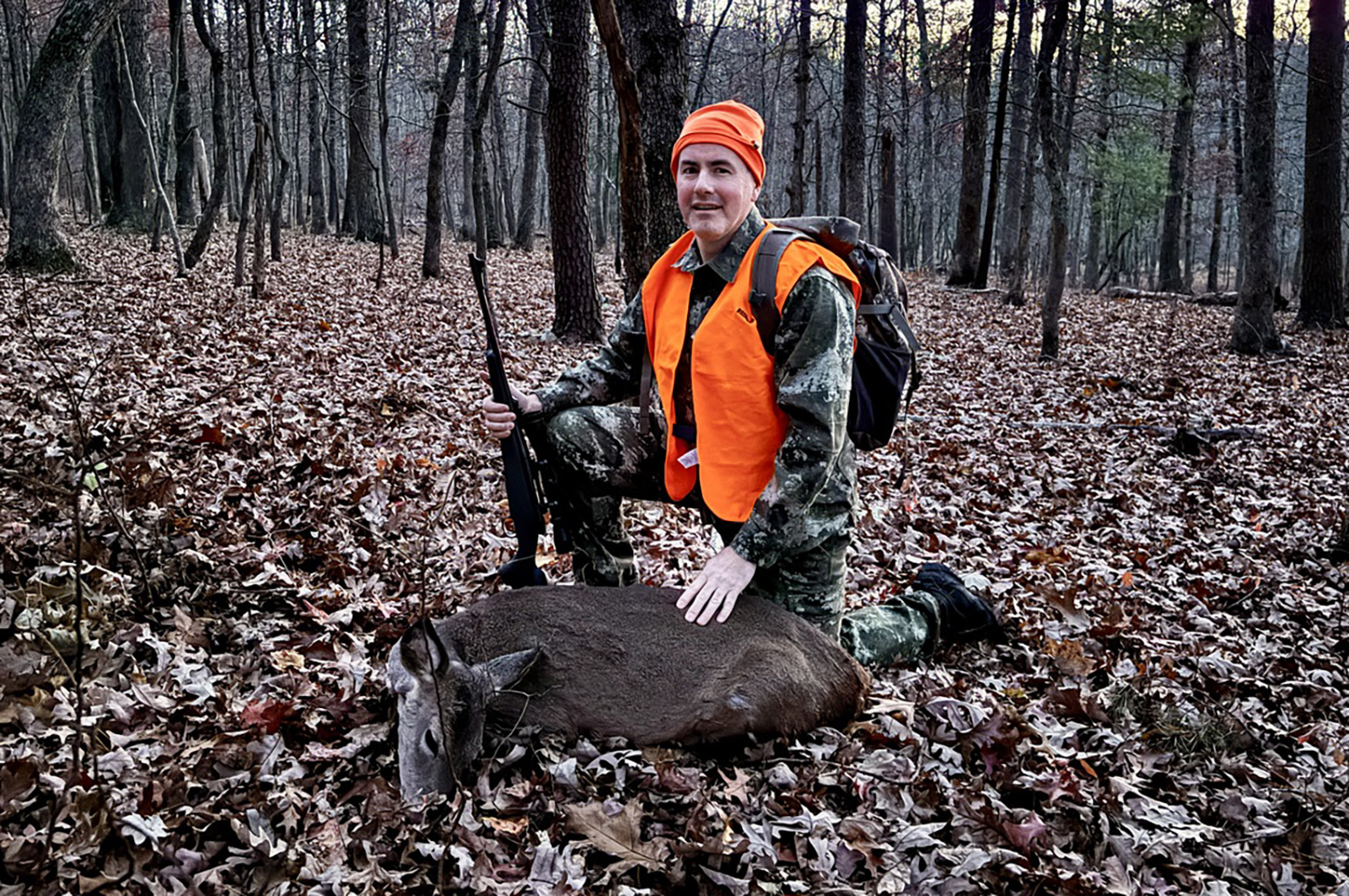
James Early with a doe he harvested. Photo courtesy of James Early
Buck fever is real. But you might not experience it.
Baker: My first year, I was very calm and able to get a doe really easily, but the next time I had a deer in my sight, it happened to be a buck. I fumbled and missed. So yeah, buck fever is definitely real. The best thing to do is to just practice any time when you can, because that prepares you on the day.
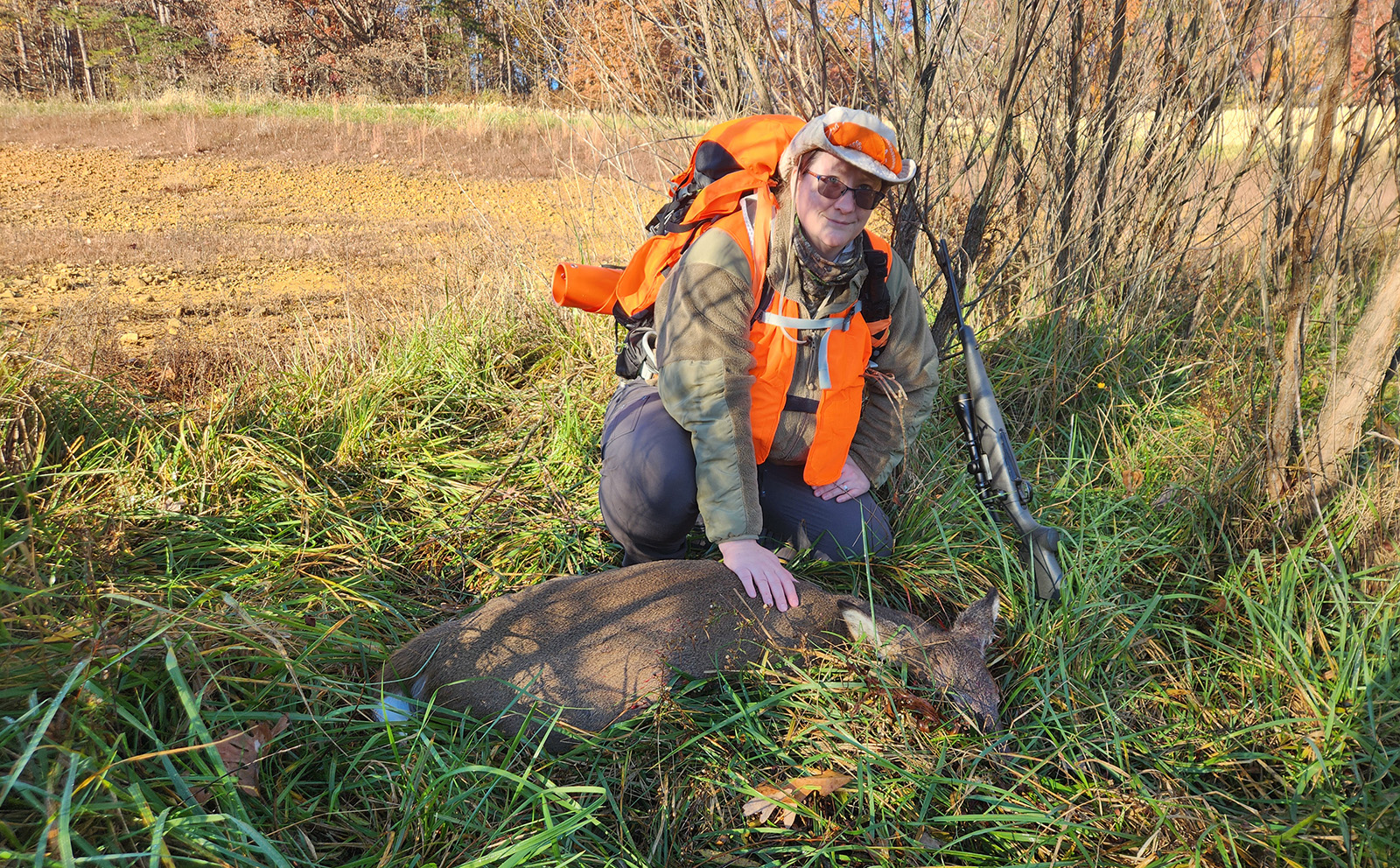
Ashley Baker with the doe she harvested. Photo courtesy of Ashley Baker
Early: People talk about a shaky trigger finger, but I didn’t have that. I felt kind of a weird calm. The experience was more tranquil than I expected, and I felt like I was finally in tune with a cycle that I had been participating in most of my life—eating meat. I just wasn’t outsourcing it anymore.
Don’t be afraid to change your equipment.
Baker: What you initially start with may not be what you ultimately end up with as far as gear. Don’t be afraid to tinker with your kit and to make it work for you. The initial time I went out tried to go bow hunting, I had my pack all nice and rigged up, and I thought I was going to be able to move very easily through the brush. But I got caught on everything. So, I’ve had to rethink how I how I carry everything. And I keep falling back on all my backpacking gear. You don’t have to buy exclusively hunting gear.
Understand you might be surprised by your reaction to harvesting an animal.
Czajkowski: I never really fully understood the emotional journey part of it until I got my first deer. I knelt down to put my hands on it to give thanks and all the emotions just kind of blanketed me. I felt so much gratitude for all of the people that had given me all kinds of help selflessly.
Last words…
Baker: Make sure you’re gassed up before you go out because you don’t want to be pumping gas in your hunting clothes.
Early: Keep ticks away. Don’t be shy with the bug spray. I use permethrin, and especially when I’m turkey hunting, I spray the heck out of everything with it.
Czajkowski: Enjoy the time in the woods. I’ve gone hiking and camping, but getting into hunting allowed me the opportunity to just sit and observe nature, hearing all the different sounds when the world wakes up. The sound of owls, especially when there’s babies in the nest, that’s one of the most beautiful sounds in the world. It’s special to be able to observe nature when it didn’t think I was there, or didn’t care that I was there,
While Baker, Czajkowski, and Early have great specific advice, they all emphasized that the best way to get better at hunting is to get out into the woods and fields and do it. “Nobody needs to be an expert to begin,” Early said. “Beyond some safety information and basic principles, you don’t need to know everything to get started. Hunting is a learn by doing kind of experience.”
Legal Disclaimer:
EIN Presswire provides this news content "as is" without warranty of any kind. We do not accept any responsibility or liability for the accuracy, content, images, videos, licenses, completeness, legality, or reliability of the information contained in this article. If you have any complaints or copyright issues related to this article, kindly contact the author above.
